
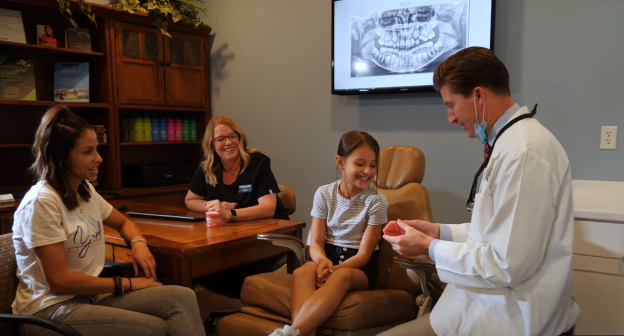
 It usually does not begin with a big concern. More often, it starts with a quiet question. A parent notices teeth coming in unevenly, spacing that seems to be disappearing, or a bite that looks a little off and wonders whether it is something to watch or something to check.
These moments of uncertainty are common. And they are often the first sign it may be time to learn more about orthodontic development.
Why orthodontic questions often come up before problems do
Orthodontic changes tend to happen gradually. Teeth shift as permanent teeth erupt, jaws grow at different rates, and spacing changes as mouths mature. Because these changes are slow, they often do not register as “problems.”
Instead, parents may notice:
- Teeth that no longer fit together the same way
- Crowding that was not there before
- Changes in how a child bites or chews
None of these observations mean something is wrong. They simply signal that growth is underway and that it may be a good time for an orthodontic check.
Common signs it may be time for an orthodontic evaluation
Braces are not just about straight teeth. Orthodontic care focuses on how teeth and jaws work together as a child grows. Parents often reach out when they notice one or more of the following:
Crowding or loss of space
As permanent teeth come in, space can become limited. Crowding can make brushing more difficult and affect how teeth align.
Teeth that do not meet evenly
When the top and bottom teeth do not fit together properly, it may point to a bite issue that benefits from orthodontic guidance.
Early or delayed loss of baby teeth
Timing matters. Losing baby teeth too early—or holding onto them too long—can influence how permanent teeth erupt.
Jaw tension or mouth breathing
Alignment issues can contribute to jaw fatigue, clenching, or mouth breathing as children grow.
Teeth shifting after once looking straight
Parents are often surprised when teeth that appeared well aligned begin to move during growth spurts.
Why Waiting Is Not Always Helpful
One of the most common misconceptions is that orthodontic concerns should cause discomfort. In reality, bite and alignment issues develop quietly and are often painless, especially in children.
Waiting for pain can delay helpful guidance during important growth stages. Orthodontic evaluations focus on how teeth and jaws are developing, not just whether something hurts. A child may feel completely fine and still benefit from an assessment that helps plan for healthy alignment as they grow.
What Dr. David evaluates during a consultation
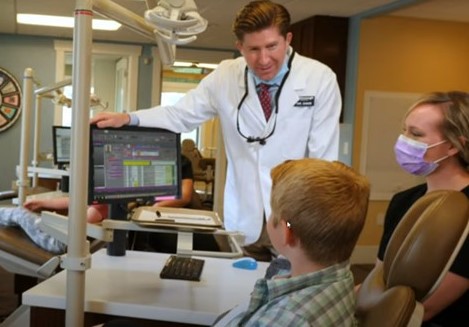 At McDonough Orthodontics, an orthodontic evaluation is designed to provide clarity.
During the visit, Dr. David McDonough evaluates:
- Jaw growth and development
- Tooth eruption patterns
- Bite alignment
- Spacing and crowding trends
While some children are ready for treatment, others it is best we monitor over time. Either path begins with understanding how a child’s smile is developing.
Clear aligners and braces: understanding your child’s options
When parents think of orthodontic treatment, traditional braces often come to mind first. While braces remain an excellent option for children and teens, they are not the only approach.
Depending on a child’s age, growth stage, and orthodontic needs, treatment options at McDonough Orthodontics may include traditional braces or clear aligners. Clear aligners can be a good option for certain older children and teens who are able to follow wear instructions consistently.
The goal is always to recommend the best option that supports long-term dental health and development.
How the OWLS Program supports growing smiles
Not every child who visits the orthodontist needs treatment right away. That is where the OWLS Program comes in.
Our Orthodontic Wellness Program (OWLS) is a complementary program for children ages 7 to 12. It provides consistent monitoring and expert advice as your child’s teeth and jaws grow and change. Think of it as a head start on a confident, radiant smile.
Through the OWLS Program, your child receives:
- Complimentary check-ups to monitor jaw and tooth development
- Digital imaging and progress comparisons over time
- Early detection of potential issues before treatment is needed
- A fun and stress-free introduction to orthodontic care
And yes, it is completely free!
When a child is enrolled in the OWLS Program we monitor them during key growth years. We monitor:
- Jaw development
- Tooth eruption
- Changes in bite alignment
This approach helps families stay informed while avoiding unnecessary treatment. If orthodontic care becomes beneficial later, parents already have a clear understanding of what is happening and why.
For more information, please read our blog OWLS Program.
When should parents consider scheduling a visit?
If you have found yourself wondering whether what you are seeing is normal growth or something that needs attention, that’s often reason enough to schedule an evaluation.
Understanding whether changes are part of typical development or a sign that orthodontic care may be helpful can give parents confidence and peace of mind.
A helpful next step for parents
If you have questions about your child’s teeth, bite, or development, an orthodontic evaluation at McDonough Orthodontics can help clarify what to expect as your child grows.
Schedule a free smile evaluation.